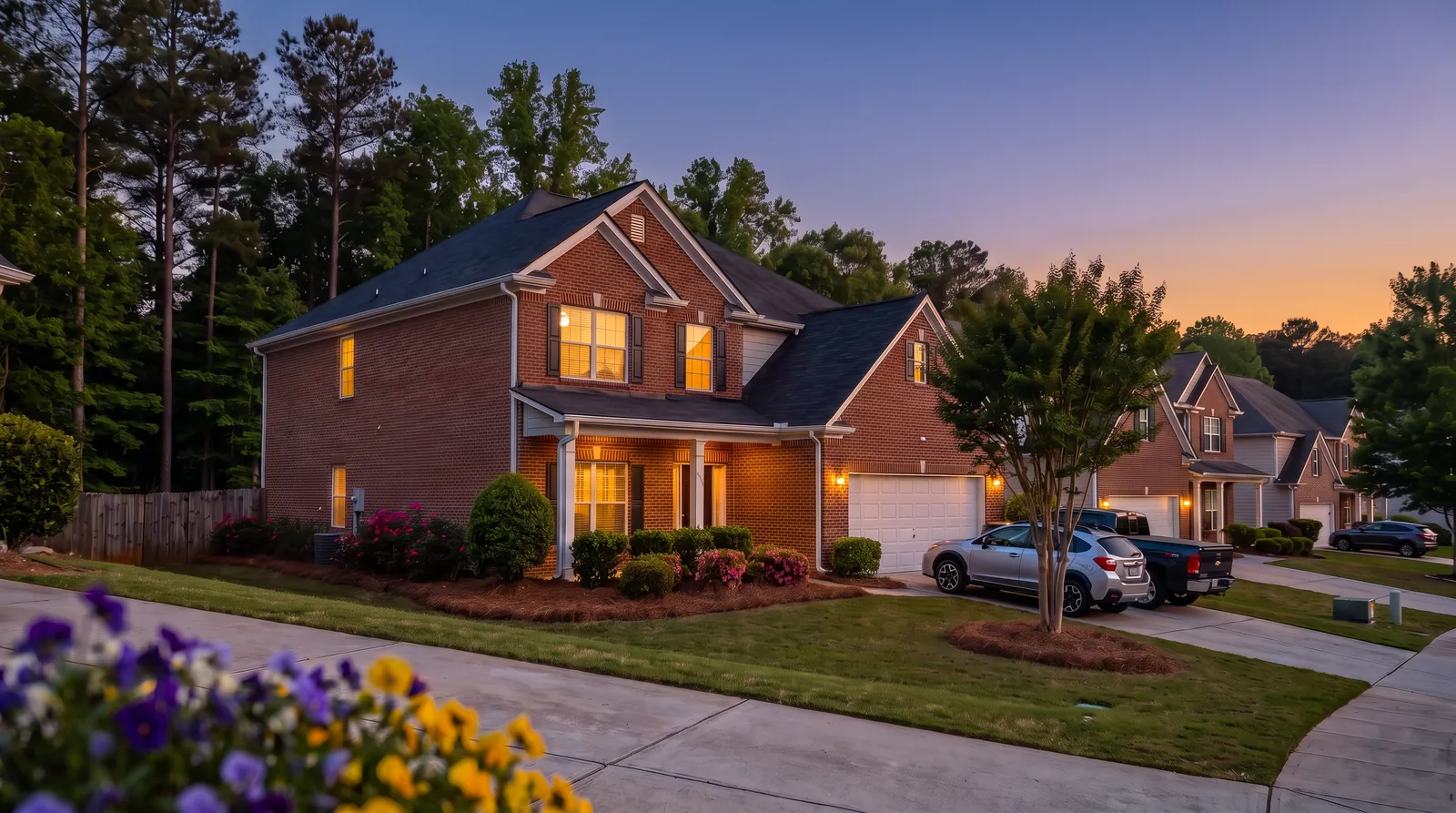
What do Clayton County homeowners get wrong about home insurance?
The usual line: "We're inland, nowhere near the coast or a big river. The policy we set up when we bought the house still covers us."
What's actually true: Clayton County gets real storm damage. The National Weather Service confirmed a tornado with 75 mph winds between Forest Park and Riverdale in February 2019, weeks before spring storm season, and the county holds the urban headwaters of the Flint River. And a policy set up years ago was sized to what rebuilding cost then. If the dwelling limit has only crept up at renewals, it can fall below what the house would cost to rebuild today, and that gap can shrink even a partial claim.
What to do instead: check three things on your declarations page this week: the dwelling limit against today's rebuild cost, the deductible that applies to wind and hail, and whether your address sits near one of the county's mapped creeks.
If you own a home in Clayton County, you're probably not worried about the same thing as a homeowner on the coast. Your questions sound more like this: is a 1980s ranch in Jonesboro insured for enough, what happens to the roof after a hailstorm in Riverdale, and does that creek behind the back fence in Forest Park matter? Our office on Southlake Parkway in Morrow hears those questions from all over the county. This guide answers them for Clayton County as a whole. For Morrow specifics, see our Morrow home insurance guide.
- County population
- 297,5952020 Census
- Owner-occupied homes
- 54.5%Census ACS, 2020–2024
- Median home value
- $222,300Census ACS, 2020–2024
- Built since 1990
- About 40%County plan, ACS 2017 data
Does where you live in Clayton County change your home insurance?
Short answerThe rules don't change: Georgia sets no county-level home insurance requirements, and a lender's rules follow the loan, not the city. What changes is the house and its surroundings, such as the roof, the age of the home and how close it sits to a mapped creek.
Clayton County packs a lot of places into about 142 square miles of land. Jonesboro is the county seat, Forest Park is the largest city, and most of the county's residents live outside any city limits, in unincorporated communities. Here's how the cities stack up, using 2020 Census counts compiled by Georgia's Legislative and Congressional Reapportionment Office.
| Place | 2020 population | What we look at for a home quote |
|---|---|---|
| Forest Park | 19,932 | Largest city North end of the county near the airport and I-285; the U.S. Geological Survey monitors Flint River sites nearby |
| Riverdale | 15,129 | Storm track The February 2019 tornado ran between Forest Park and Riverdale; Flint River monitoring sites nearby too |
| Lovejoy | 10,122 | Same state rules Check the address on FEMA's flood map like anywhere else in the county |
| Morrow | 6,569 | Our office Jester Creek is monitored in and near the city; see our Morrow home guide |
| Jonesboro | 4,235 | County seat ZIP codes 30236 and 30238; Flint River monitoring sites near the city |
| Lake City | 2,952 | Same state rules Borders Morrow to the north |
A mailing address isn't the same as city limits: plenty of homes with a Jonesboro, Riverdale or Forest Park address sit in unincorporated Clayton County. What matters for a quote is the exact address, which sets the flood map lookup and the distance to the nearest fire station and hydrant.
Living near Hartsfield-Jackson
Hartsfield-Jackson sits mostly in unincorporated Clayton County, and the county's 2019 comprehensive plan update lists airport noise as a challenge for nearby neighborhoods. Noise is a quality-of-life issue, not an insurance one: a homeowners policy pays for sudden physical damage, not the gradual wear of living under a flight path, so homes near the airport use the same checklist as the rest of the county.

How do you insure an older home in Clayton County?
Short answerThe same way as a new one, with more attention to the roof, wiring, plumbing and heating. Updates make an older house easier to insure, and the right settlement terms matter more when the materials are decades old.
The county's 2019 comprehensive plan update, citing 2017 Census survey data, says about 40% of its housing was built since 1990, which means most homes here are older than that. The same plan puts single-family structures at about 69% of the county's housing units (2014 survey data). So the typical home we quote is a house, often one built decades ago.
Older homes are insurable; they just bring more questions. These are the details that move the answer:
- The roof. Age, material and condition matter more than anything else on an older house in hail country. A recently replaced roof can make a 1970s house look very different to an insurer.
- Electrical, plumbing and heating. Insurers commonly ask the year each system was last updated. Original systems in an older home may limit options until they're updated.
- How the policy settles. Replacement cost pays to repair with new materials; actual cash value subtracts depreciation, according to the Georgia Office of Commissioner of Insurance and Safety Fire. On an older home, the gap between the two can be large, and some policies settle the roof differently from the rest of the house, so ask how yours works.
- Building code upgrades. Repairing an older house can mean bringing parts of it up to current code. Many policies limit what they pay for that unless you add ordinance or law coverage, so it's worth a question.
Is your dwelling limit enough to rebuild a Clayton County home?
Short answerCheck it against today's rebuild cost, not what the house sold for. Georgia's insurance regulator says most policies require insuring the home to at least 80% of the cost to rebuild, and falling short can cut a claim payment even when the damage is partial.
The Census Bureau puts the median value of owner-occupied homes in Clayton County at $222,300 (American Community Survey, 2020–2024). That's a market figure: it includes the lot and the location, and it says nothing about what labor and materials would cost to rebuild the house. The Georgia Office of Commissioner of Insurance and Safety Fire says it directly in its consumer guide, Insurance Before and After a Disaster: the amount of insurance you buy should be based on rebuilding costs, not market value, and most policies require the home to be insured to at least 80% of the cost to rebuild or replace it.
That 80% line is the part people miss. On many replacement-cost policies, if the dwelling limit falls below it, the policy pays only a share of a covered loss, even a small one. Exactly how that works depends on your policy's wording, so treat the example below as a way to see the risk, not a rule for every policy.
Illustrative example, not a real claim or quote
A 1980s brick ranch in Jonesboro would cost about $280,000 to rebuild today. Its dwelling limit was set years ago and now sits at $200,000. Eighty percent of the rebuild cost is $224,000, so the house is below the line.
A kitchen fire causes $40,000 of covered damage. On a policy that pays in proportion, the payment is $200,000 ÷ $224,000 of the loss, about $35,700 before the deductible. The homeowner covers roughly $4,300 more than expected.
If a tornado destroyed the house, the policy would pay no more than the $200,000 limit, leaving about $80,000 of the rebuild unfunded. Raising the limit to the full rebuild cost closes both gaps.
We check the number from the house, not the listing: square footage, stories, foundation, roof, exterior, finishes and updates. Other structures, personal property and loss of use are often set as a share of the dwelling limit, so an outdated limit shortchanges all of them. Our Morrow guide walks through rebuild cost line by line.
What storm damage do Clayton County homes face, and which deductible applies?
Short answerDamaging thunderstorm wind, hail and the occasional tornado, plus tropical rain and wind from June to November and hard freezes in winter. Storm damage to the house is covered by a homeowners policy after the deductible that applies to wind and hail, which may be larger than your regular one.
The Georgia Office of Commissioner of Insurance and Safety Fire says tornado season in Georgia generally begins March 1 and runs to the end of May, and hurricane season runs from June 1 through November. The National Weather Service office in Peachtree City, which issues warnings for Clayton County, publishes a severe weather climatology for the north and central Georgia counties it covers. It puts large hail at about 7 days a year, peaking in April, and tornadoes at about 6 days a year, mostly from March through May.
Clayton County has seen what that looks like up close. On , the National Weather Service confirmed an EF-0 tornado with 75 mph peak winds in northern Clayton County, between Forest Park and Riverdale. It tracked about 3 miles, snapped and uprooted trees, tore shingles off apartment roofs and dropped large limbs onto a house. That was the weakest rating on the scale.
| The hazard | When it tends to hit | What usually responds |
|---|---|---|
| Thunderstorm wind | Any month; most often in summer, peaking in July (NWS) | Check deductible Homeowners policy, after the wind and hail deductible if you have one |
| Large hail | Spring and summer; peaks in April (NWS) | Check deductible Homeowners policy; roof settlement terms matter |
| Tornado | Mostly March through May, but any month (OCI, NWS) | Check deductible Homeowners policy, including loss of use if you can't stay in the house |
| Tropical wind and rain | June through November (OCI) | Split Wind damage under the homeowners policy; rising water only under a flood policy |
| Burst pipes after a freeze | Winter cold snaps | Usually covered Homeowners policy, per the state insurance regulator; slow leaks are not |
Your wind and hail deductible, in dollars
The Georgia Office of Commissioner of Insurance and Safety Fire has warned that some policies carry separate deductibles for hurricane or wind losses. When that deductible is a percentage, it's figured from your dwelling limit, not from the size of the claim. On a Clayton County home insured for $250,000, a 1% wind and hail deductible is $2,500; a 2% deductible is $5,000. Either can be a sensible trade for a lower premium if you have the savings; the problem is not knowing which one you have. Our Morrow home guide works through a full hail-claim example.
Where does Clayton County flood, and do you need flood insurance?
Short answerFlood risk here follows the Flint River's headwaters and the creeks that feed it, and it changes street by street. No homeowners policy covers flood, and most flood policies take 30 days to start, so look up your address on FEMA's flood map before storm season.
The Flint River begins among urban streams piped beneath Hartsfield-Jackson Airport, and the county's comprehensive plan says Clayton County contains the large majority of the river's urbanized headwaters. The U.S. Geological Survey runs stream monitoring sites on the Flint near Jonesboro, Riverdale and Forest Park, and on Jester Creek in and near Morrow. When FEMA proposed updated flood elevations for Clayton County in a 2006 Federal Register notice, it named Beaver Dam, Hurricane, Jester, Mud, Panther, Sullivan and Upton Creeks, a Flint River tributary and Lake Spivey.
So two houses a few blocks apart can carry very different flood risk, and the only reliable answer is your address on the FEMA Flood Map Service Center. If your home sits in a high-risk zone and you have a mortgage, your lender will generally require flood coverage. Outside a mapped zone the decision is yours, and those homes can still take water when a tropical system stalls over the metro.
- Homeowners policies exclude flood. The Georgia Office of Commissioner of Insurance and Safety Fire says loss caused by flood is not covered under a homeowners policy.
- NFIP limits. Through the National Flood Insurance Program, a single-family home can be insured for up to $250,000 on the building and $100,000 on contents, according to FEMA.
- The 30-day wait. Most NFIP policies take effect 30 days after purchase. A policy bought as part of a mortgage transaction is the exception.
- Water backup is separate again. Water that comes up through a floor drain or sewer line is usually excluded from both the homeowners and flood policy unless you add water backup coverage to the homeowners policy.
What if you rent out a house in Clayton County?
Short answerA homeowners policy is built for a house you live in. Once a tenant moves in, the house usually needs a landlord (dwelling) policy, and your tenant needs renters insurance for their own belongings.
Census figures put Clayton County's owner-occupied rate at 54.5% for 2020 to 2024, so close to half of occupied homes are rented, many of them single-family houses.
If one of them is yours, tell your agent before the tenant moves in. A homeowners policy is written for an owner-occupied home and may not respond the way you expect once you've moved out. A landlord policy covers the building, liability as a property owner and, often, lost rent after a covered loss. Your tenant's belongings are their responsibility, so many landlords write renters insurance into the lease. See our landlord insurance page for how we set those up.
What affects home insurance cost in Clayton County, and does bundling help?
Short answerThe house drives the price: its rebuild cost, roof, age and updates, plus your deductibles, claims history and the coverage you choose. Bundling home and auto may lower your total cost without giving up coverage.
We don't publish a typical Clayton County home insurance premium. There's no reliable official figure for the county, and two houses on the same street can price very differently. Here's what moves the number on a homeowners policy:
- The dwelling limit. More rebuild cost means more premium. That's the right trade; being under-insured is the expensive way to save.
- The roof. Its age, material and condition carry a lot of weight in a county that sees hail every spring.
- The age of the home and its updates. Updated electrical, plumbing and heating can make an older house easier to insure.
- Your deductibles. Higher deductibles lower the premium. Pick one you could pay from savings the day after a storm.
- Claims history and protective features. Prior claims can raise the price; monitored alarms and similar features may qualify for discounts on some policies.
Putting home and auto on one account is one of the most common ways households lower their total insurance cost, and bundling discounts may be available depending on the policy. It also lines up your liability limits in one conversation. Clayton County drivers have their own questions about interstates, airport traffic and uninsured drivers; our Clayton County car insurance guide covers them.
If a home can't get coverage in the regular market, Georgia has a last resort. The Georgia Underwriting Association, the state's FAIR Plan under O.C.G.A. Title 33, Chapter 33, exists so property owners can still get basic property insurance. Its coverage is narrower: Georgia's insurance regulator notes that wind losses under its policies are settled at actual cash value. Ask why a home was declined first, because a repair like a new roof can change the answer.
How do you get a Clayton County home quote from our Morrow office?
Short answerCall, start online or stop by Southlake Parkway. A licensed agent confirms the house details, checks rebuild cost and every deductible, and lines up the new policy to start the day the old one ends. Most county homeowners never need to visit.
Our only office is at 1395 Southlake Parkway, Suite E, in Morrow, and we serve homeowners all over Clayton County by phone, email and online, in English or Spanish. Here's what to have ready:
- Your current declarations page. It shows the dwelling limit, every deductible and your add-ons. If you'd rather not dig for it, share your policy through our free policy review.
- The house basics. Address, year built, square footage, stories, foundation, exterior and the roof's age and material.
- Your update history. The years the roof, electrical, plumbing and heating were last updated.
- Mortgage details. Lender name, loan number and whether the premium is paid through escrow, so the new policy reaches the lender and the old one is cancelled only after the new one is in force.
- Claims history. Any home claims in recent years.
The most common surprise we see isn't the price. It's a dwelling limit that hasn't kept up with rebuild cost, or a storm deductible that turns out to be a percentage. Better to learn that on a call with us than from an adjuster. For everything we quote around Morrow, see our Morrow insurance hub.
The Bottom Line
Clayton County homeowners don't need a different kind of home insurance. They need a policy that fits the house they actually own. For most of the county, that means a home built before 1990, insured to today's rebuild cost, with a roof and systems the insurer knows about and a storm deductible you've already worked out in dollars.
Then check the two gaps the county's weather and water expose. Wind, hail and tornado damage is covered after the right deductible, and spring isn't the only season it comes. Flood is never in a homeowners policy, the Flint River and its creeks start right here, and most flood policies take 30 days to begin. If you rent the house out, it needs a landlord policy instead.
For how we put Georgia home policies together, see our home insurance page, or start a quote below.
Related Questions Clayton County Homeowners Ask
Is Clayton County in a flood zone?
Parts of it are. Flood zones in Clayton County follow the Flint River's headwaters and the creeks that feed it, and FEMA flood studies for the county have named Beaver Dam, Hurricane, Jester, Mud, Panther, Sullivan and Upton Creeks. Whether your house is in a mapped zone depends on its exact address, so look it up on the FEMA Flood Map Service Center. Either way, a homeowners policy doesn't cover flood, and most flood policies take 30 days to start.
How much home insurance do I need for a house in Clayton County?
Enough dwelling coverage to rebuild the house at today's labor and material costs, which can be different from its market value or what you paid. The Georgia Office of Commissioner of Insurance and Safety Fire says the amount should be based on rebuilding cost and that most policies require insuring the home to at least 80% of that cost. Personal property, other structures and loss of use are often sized from the dwelling limit, so getting that number right matters most.
Do tornadoes hit Clayton County?
Yes. The National Weather Service confirmed an EF-0 tornado with 75 mph winds between Forest Park and Riverdale on February 12, 2019. Its Peachtree City office counts about 6 tornado days a year across north and central Georgia, most from March through May, but tornadoes can come in any month. Wind and tornado damage to the house is covered by a homeowners policy, after the deductible that applies to wind.
Can I get home insurance on an older house in Clayton County?
Usually, yes. Most of the county's homes were built before 1990, and insurers write them every day. What helps is a known history: the year the roof, electrical, plumbing and heating were last updated. Ask how the policy settles a roof claim and whether it pays for code upgrades. If the regular market declines a home, ask why, because a repair may change the answer. Georgia's FAIR Plan is the last resort.
Does home insurance cover a house I rent out in Clayton County?
A homeowners policy is written for a home you live in, so once a tenant moves in, the house usually needs a landlord policy instead. A landlord policy covers the building and your liability as the owner, and often lost rent after a covered loss. Your tenant's belongings aren't covered by your policy, which is why many landlords ask tenants to carry renters insurance. Tell your agent before the tenant moves in.
Last reviewed by Mithferson Joseph, licensed Georgia insurance agent (GA Lic. #3534358, NPN 17942191), on . Sources checked: U.S. Census Bureau QuickFacts for Clayton County (2020 Census; American Community Survey, 2020–2024); 2020 city counts from Georgia's Legislative and Congressional Reapportionment Office; Clayton County's 2019 comprehensive plan update (filed with the Georgia Department of Community Affairs); the Georgia Office of Commissioner of Insurance and Safety Fire's disaster guide and June 2025 hurricane guidance; the National Weather Service, Peachtree City; FEMA, the National Flood Insurance Program and the Federal Register; the U.S. Geological Survey; and O.C.G.A. Title 33, Chapter 33. Written by the All Access Agency team in Morrow, GA, serving Clayton County, Henry County and homeowners across Georgia. General information, not a substitute for reading your own policy. Coverage depends on your specific contract, and not every coverage or discount is available on every policy. For consumer help, see the Georgia Office of Commissioner of Insurance and Safety Fire.