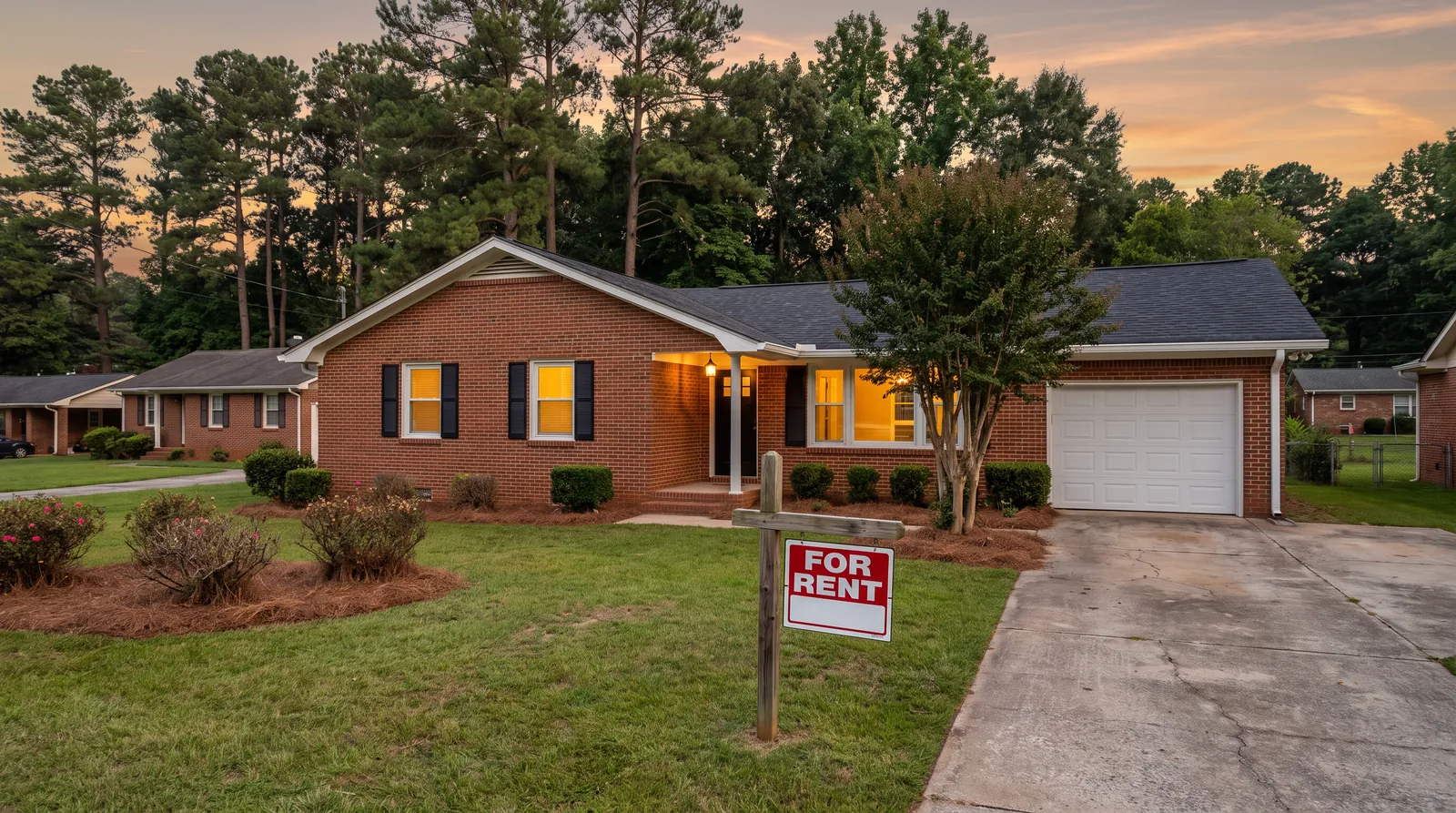
A rental home in south metro Atlanta
Home / Landlord Insurance

Georgia Landlord Insurance: It isn't a house. It's income.

A rental needs a policy built for the building, the liability, and the rent. Homeowners insurance on a tenant-occupied property is a claim waiting to be denied.

2 Mo.
GA Deposit Cap, Leases Since 7/2024
30 Days
To Return Or Itemize A GA Deposit
Mar–May
GA Tornado Season (OCI)
Jun–Nov
Hurricane Season (GA OCI)
The Quick Answer

A Georgia rental needs a landlord policy, typically a DP-3 open-perils dwelling form, not homeowners insurance. Filing a homeowners claim on a tenant-occupied property can be investigated and denied. A landlord policy does three things a homeowners policy will not: cover the dwelling as a rental, cover landlord liability, and replace lost rents when a covered loss makes the unit unlivable. In Georgia, watch the wind/hail or hurricane deductible: the Georgia Office of Commissioner of Insurance and Safety Fire notes some policies carry a separate one. Tenant belongings are never covered, which is why many leases require renters insurance. Georgia caps security deposits at two months' rent on leases entered or renewed on or after July 1, 2024, and the deposit must be returned, or deductions itemized, within 30 days after you get the unit back. If the private market says no, the Georgia Underwriting Association, the state's FAIR Plan, is the last resort. All Access Agency, a local insurance agency in Morrow, quotes rental property free at (770) 576-3416.

Right policy
DP-3 landlord, not homeowners
GA deposit cap
Two months' rent (leases since 7/1/2024)
Never covered
Tenant belongings, unpaid rent
Free quotes
(770) 576-3416
Georgia Landlord Insurance, The Short Version

The most expensive mistake is the quietest one. Wrong policy, right property.

It happens like this. You bought the place, lived in it, insured it as a home or a condo. Then you moved, kept it, and rented it out. The policy renewed automatically every year, so nobody thought about it. Now a pipe bursts, you file a claim, and the adjuster asks who has been living here.

A homeowners policy is written for a home you occupy. Once tenants live there, the insurer can investigate occupancy and deny the claim. Years of premiums, no coverage, and it is entirely avoidable with one phone call. If you are renting out a property that is still on a homeowners policy, stop reading and call us. That is the whole point of this page and everything below is detail.

The right policy is a landlord policy, typically a dwelling fire DP-3 form, which insures the building on an open-perils basis. It usually costs somewhat more than homeowners coverage on the same house, and it does three jobs that a homeowners policy does not: it insures the building as a rental, it covers the liability that comes with people living in a property you own, and it replaces the rent when a covered loss puts the unit out of service. That last one is why this policy exists. Your mortgage does not care that the kitchen burned.

Georgia adds its own edge: storms. Tornado season generally runs March through May, hurricane season runs June through November, and tropical systems bring wind and heavy rain well inland. Some policies carry a separate wind/hail or hurricane deductible, sometimes set as a percentage of the dwelling limit, and 2 percent on a $300,000 rental is $6,000 out of pocket before the policy pays. On a rental, that is a business expense you want planned, not discovered. We start with our primary carrier, and through brokerage relationships we can also access 30+ other carriers when it isn't the right fit. The deductible is one of the first things we look at on a rental in this state.
What a landlord policy covers. And what lands back on you.

Three coverages do the real work: the building, the liability, and the rent. The exclusions are where landlords get surprised.

Core
Rebuild Cost

Dwelling

The structure, at what it costs to rebuild today rather than what the property would sell for. Take replacement cost over actual cash value where you can, and watch for roof coverage that pays depreciated value. A hailstorm that shreds a twenty-year-old roof should buy you a new roof, not a fraction of one.

Core
$500k+

Landlord Liability

The broken stair rail, the slip on a rain-slick walkway, the dog the tenant was not supposed to have. Covers defense costs as well as the judgment. Start at $500,000 and put an umbrella on top, because rental property attracts claims that owner-occupied homes do not.

Core
12 Months

Loss of Rent

Replaces rental income while a covered loss makes the unit unlivable, often up to about twelve months of fair rental value. Match the limit to a realistic repair timeline, which after a major Georgia storm, when every roofer is booked, runs longer than you would like.

Worth adding
Civil Authority

Civil Authority

Responds when a government order blocks access to the property after a covered loss nearby, such as a fire next door or an evacuation, even before your own damage is tallied. Carries time limits and conditions. Read it before you need it.

Worth adding
Vacancy

Vacancy Endorsement

Most policies restrict coverage once a property sits empty past roughly 30 to 60 days, and vandalism and water damage are often the first things excluded. Turnover and renovations are normal. Tell us and we will keep the coverage intact.

Worth adding
Your Stuff

Landlord Property

The appliances, the washer and dryer, the furniture in a furnished unit, the mower and yard equipment in the garage. It is your property, not the tenant's, and standard limits are thin. Worth sizing on purpose.

Not covered
Their Stuff

Tenant Belongings

Never covered, and it should not be. That is what renters insurance is for. Require it in the lease, ask to be added as additional interest, and verify it at renewal.

Not covered
Bad Tenants

Unpaid Rent & Evictions

A tenant who stops paying is a legal problem, not a claim. Loss of rent responds to covered physical damage, not to a bad tenancy. Eviction costs and rent you never collected are not on the policy.

Not covered
Water

Flood & Sewer Backup

Flood is never part of a dwelling policy. It is a separate policy, and on a rental it protects both the building and the rent it produces. Sewer and drain backup is not flood and is not standard either; it is an endorsement. On a rental with a ground-floor or terrace-level unit, ask about both. Your tenants' belongings need their own contents flood policy.

Renting out a place that is still on a homeowners policy?

It is the most common gap we find, and the most expensive one. Fixing it takes one call, and it is the difference between a paid claim and a denied one.

The Georgia Fine Print

Deposits, deductibles, and a last resort. Know them before you need them.

Three things specific to owning a rental here, and most landlords have not run the numbers on all of them.

Georgia security deposits: the rules changed in 2024

For residential leases entered into or renewed on or after July 1, 2024, a Georgia landlord cannot collect a security deposit of more than two months' rent. When the tenant moves out, you have 30 days after getting the unit back to return the deposit or send a written, itemized statement of what you kept and why, and you cannot deduct for ordinary wear and tear. Some of the paperwork rules, like move-in and move-out damage lists and escrow, do not apply to an individual who owns 10 or fewer rental units, unless a paid manager runs them.

Deposit law is your attorney's lane, not ours. The insurance angle is simple: a deposit covers a tenant's damage, not a fire, a tornado, or a lawsuit. That is the policy's job, and the policy should say rental, too.

The wind/hail deductible, rental edition

Georgia's emergency management agency counted 343 tornadoes from 2001 to 2020, about 17 a year, and tropical systems add inland wind and flooding. When Hurricane Helene came through in September 2024, Atlanta saw 11.2 inches of rain. The Georgia Office of Commissioner of Insurance and Safety Fire warns that some policies carry a separate hurricane or wind deductible.

Find that number on every declarations page you own. On a rental, a deductible that large is a business expense. Plan for it, budget for it, or ask whether a flat-dollar option is available if the numbers favor it.

When the private market says no

Older roof, claims history, a long vacancy: sometimes a rental gets declined. The Georgia Underwriting Association is Georgia's FAIR Plan, set up under state law as an insurer of last resort for property the standard market will not write. Its coverage is more limited than a standard policy, so confirm eligibility and terms with the GUA directly. It is a last resort, not a first choice, and we would rather help you get back to a standard policy. But it exists, and it beats going without.

What to do with this

Send us the declarations page on every door you own. We will tell you whether the policy is actually a landlord form, what the loss of rents limit really buys at today's rents, where the wind/hail deductible sits, and whether flood and sewer backup coverage exist at all. About fifteen minutes per property, free, and better done before tornado season than after the first storm. On lease language and tenant law, talk to a landlord-tenant attorney, because we are insurance people and that is not our lane.

Does your loss of rents limit match what the unit actually rents for?

It is a fifteen-minute read of your declarations page and it is free. Better to know in February than after the first spring storm.

Seven ways to protect the return. Not just the building.

A rental is a business, so the goal is not the cheapest premium. It is the best after-tax cost of risk, and those are different numbers.

1

Require renters insurance, then actually verify it

Many leases require it. Put a minimum liability limit in the lease, ask to be added as additional interest so you are told when it lapses, and check at each renewal. A tenant with their own coverage means their loss goes to their carrier instead of becoming your liability claim. We are happy to quote your tenants directly.

2

Buy the umbrella. It is the cheapest thing on the page.

Rental property attracts liability the way owner-occupied homes do not. An umbrella stacks $1 million or more across your rentals, your home, and your auto, and it is often affordable relative to the protection it adds.

3

Take a real deductible, because you are a business

You should not be filing small claims on a rental anyway: claims history follows the property and drives both price and whether carriers will write you at all. Set the deductible where it belongs and self-insure the small stuff on purpose.

4

Bundle the rentals with your own policies

Multiple properties with one carrier, plus your home and auto, is where multi-policy discounts may be available. It also means one person can see your whole exposure instead of four people each seeing a slice of it.

5

Put the money in the roof

Insurers price roofs hard, and some policies pay roofs at depreciated value. A documented newer roof can change both the price and which insurers will write the property. On a rental the roof does double duty: lower premium, fewer tenant disruptions.

6

Tell us when the use changes

Long-term lease became a short-term rental. Tenant moved out and it is vacant for four months. You finished the basement and rented that too. Every one of those changes the policy, and every one is a denied claim if we hear about it after the fact instead of before.

7

Remember the premium is deductible

Insurance on a rental is generally a deductible business expense, so the after-tax cost is lower than the invoice. That is worth remembering before you cut coverage to save a few dollars a month. Confirm the details with your CPA, since we do insurance and they do taxes.

However you landlord. We write it.

One condo, a duplex, the house you moved out of, the garage apartment out back. Each is a different policy conversation.

One door or a dozen, the review is free.

Tell us what you own and how it is rented. We will tell you what the policy should be, what it costs, and what is currently exposed.

Landlord insurance in Morrow. And across south metro Atlanta.

Rental property is priced ZIP by ZIP, and so is whether an insurer will write it at all. We serve rental owners across Clayton and Henry counties and the rest of Georgia. Tell us where the door is.

Georgia landlord insurance questions. Straight answers.

Can I use homeowners insurance on a rental property?

No, and this is the most expensive quiet mistake in rental ownership. A homeowners policy is written for a home you occupy; once tenants live there, the insurer can investigate occupancy and deny the claim.

A tenant-occupied property needs a landlord policy, typically a dwelling fire or DP-3 form. If your rental is still on a homeowners policy, fixing it takes one phone call.

What does landlord insurance cover?

A DP-3 is an open-perils dwelling form, and three coverages do the real work: the dwelling at rebuild cost, landlord liability for injuries and property damage claims arising from the rental, and loss of rents when a covered loss makes the unit unlivable, often up to about twelve months of fair rental value.

Landlord-owned property like appliances gets its own limit. What it never covers: tenant belongings, unpaid rent from a bad tenancy, or eviction costs.

How much does landlord insurance cost in Georgia?

Expect it to cost somewhat more than a homeowners policy on the same house, in exchange for coverage that actually responds on a rental.

Roof age and condition, the wind/hail deductible you choose, claims history, and how the property is rented all move the number. The premium is generally a deductible business expense, so the after-tax cost is lower than the invoice. Confirm with your CPA.

How much security deposit can I charge in Georgia?

For leases entered into or renewed on or after July 1, 2024, no more than two months' rent. After the tenant leaves, you have 30 days from getting the unit back to return the deposit or send a written, itemized statement of what you kept, and ordinary wear and tear cannot be deducted.

Some paperwork rules, like move-in and move-out damage lists and escrow, do not apply to an individual who owns 10 or fewer rental units unless a paid manager runs them. Confirm details with your attorney. And remember the deposit covers tenant damage, not a fire, a storm, or a lawsuit; that is the policy's job.

What is a separate wind/hail or hurricane deductible?

Some policies apply a different deductible to wind, hail, or hurricane damage than to everything else, and it is sometimes a percentage of the dwelling limit instead of a flat dollar amount: 2 percent on a $300,000 rental is $6,000. The Georgia Office of Commissioner of Insurance and Safety Fire warns policyholders to check for it.

Tornado season in Georgia generally runs March through May, and hurricane season runs June through November. On a rental, know the number before storm season.

Are tenant belongings covered by my landlord policy?

Never, and they should not be. That is what renters insurance is for.

Many leases require it. Put a minimum liability limit in the lease, ask to be added as additional interest so you are notified if it lapses, and verify at each renewal. A tenant with their own coverage means their loss goes to their insurer instead of becoming your liability claim.

Does landlord insurance cover unpaid rent or evictions?

No. A tenant who stops paying is a legal problem, not a claim.

Loss of rents responds to covered physical damage that makes the unit unlivable, not to a bad tenancy. Eviction costs and rent you never collected are not on the policy; screening remains the better investment.

What if my rental sits vacant between tenants?

Tell your agent before it happens.

Most policies restrict coverage once a property sits empty past roughly 30 to 60 days, and vandalism and water damage are often the first exclusions to bite. During a Georgia hard freeze, an empty house with the heat turned off is a burst-pipe claim waiting to happen. Turnover and renovations are normal; a vacancy endorsement keeps the coverage intact through them.

Do I need special coverage for an Airbnb or short-term rental?

Yes. Standard landlord forms often exclude stays under 30 days, and platform host protection is not an insurance policy you control.

Short-term and weekend rentals need coverage built for that use. Disclosing the rental pattern up front is the whole game: a denied claim after the fact costs far more than the right policy would have.

Do I need an LLC, an umbrella, or both for my rentals?

The entity question belongs to your attorney and CPA. The insurance answer is that rental property attracts liability that owner-occupied homes do not, and an umbrella stacking $1 million or more across your rentals, home, and auto is usually one of the most cost-effective coverages you can buy.

Make sure the policy names match how the property is actually owned.

What if I can't find coverage for my rental?

Older roof, claims history, a long vacancy: sometimes a rental gets declined. We start with our primary carrier, and through brokerage relationships we can also access 30+ other carriers. If none of them fit, the Georgia Underwriting Association, Georgia's FAIR Plan, is an insurer of last resort for property the standard market will not write; confirm eligibility with the GUA.

It is a last resort, not a first choice, and we would rather help you get back to a standard policy. But it exists, and it beats going without.

How much loss of rents coverage do I need?

Match it to fair rental value over a realistic repair timeline. Around metro Atlanta that timeline stretches after a major storm or tornado outbreak, when contractors are booked across the region.

Twelve months of fair rental value is a common shape; underestimating the monthly figure or the timeline is the common mistake. We size it to your actual lease, not a default.

Still have questions? Call (770) 576-3416. We will give you a straight answer.

Protect the building, the liability, and the rent.
Free, fast, and in plain English.

Tell us about the property and how it is rented. We will build the policy around the investment. It takes about 15 minutes to get started.