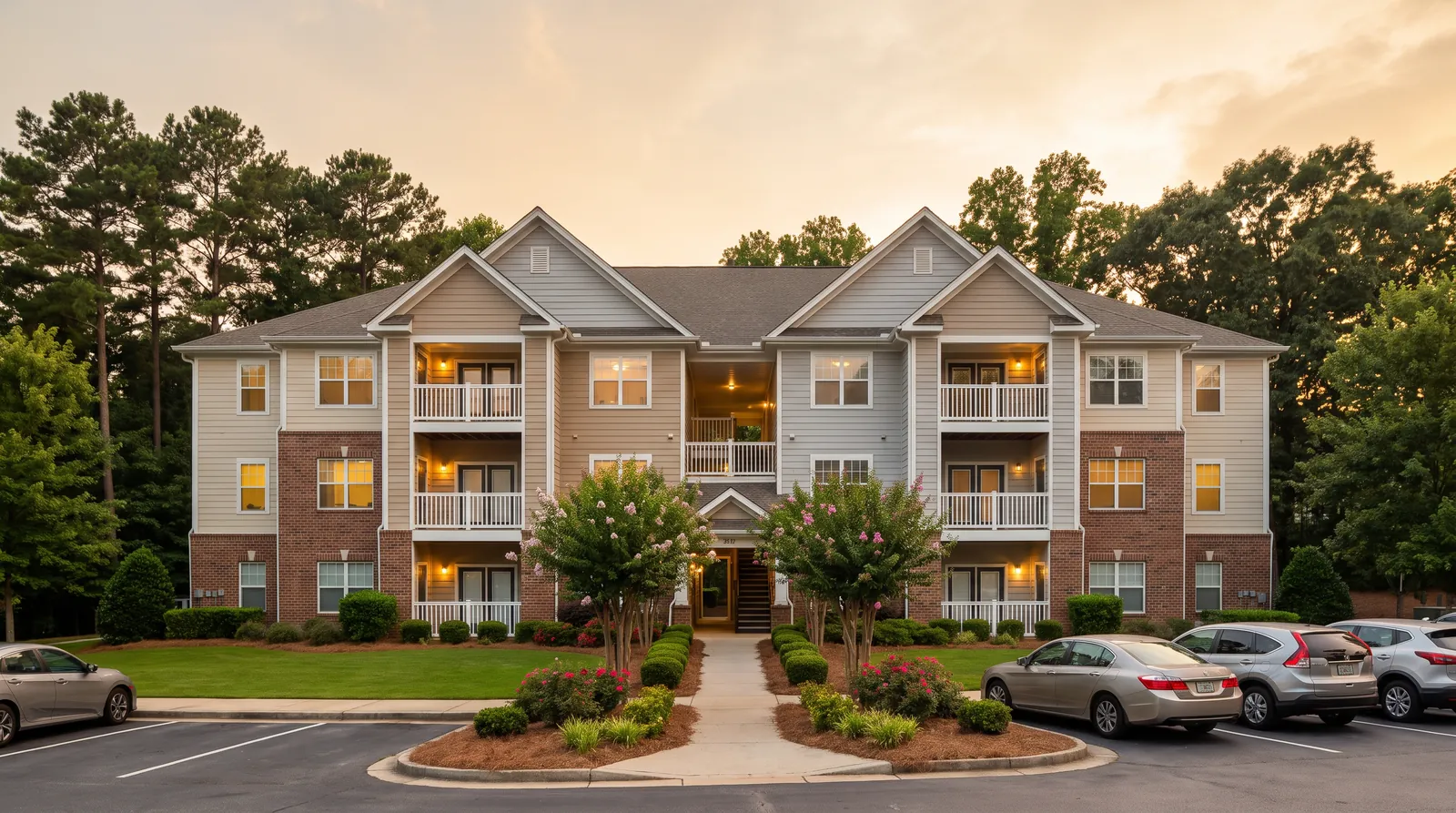
A condominium building
Home / Condo Insurance

Georgia Condo Insurance: Your HOA's bad day becomes your bill.

Many condo policies carry just $1,000 for that. Georgia law lets an association pass up to $5,000 of its deductible to each affected owner, if its documents allow it. Closing the gap is usually a small line on the quote.

$5,000
Max HOA Deductible Per Owner, Per Loss (GA)
$1M/$2M
HOA Liability Minimum, GA Condo Act
5 Days
To Exchange Insurance Info On Water Claims
Full RC
Master Policy Must Insure Replacement Cost
The Quick Answer

A condo policy (HO-6) covers your belongings, your improvements, your liability, loss of use, and loss assessment. Your association's master policy covers the building and common areas. Under the Georgia Condominium Act (O.C.G.A. 44-3-107), the association must insure the buildings at full insurable replacement cost, less deductibles, including common elements and in-unit items like HVAC, drywall, floors, plumbing, wiring, built-in cabinets and major appliances. It may exclude improvements made by unit owners, and it must carry liability of at least $1 million per occurrence and $2 million aggregate. Under O.C.G.A. 44-3-94, if the condo documents allow it, the association may pass up to $5,000 of its deductible to each affected owner per loss, while many HO-6 policies include only $1,000 of loss assessment coverage. Sewer backup and flood each need their own coverage. All Access Agency, a local insurance agency in Morrow, reads the master policy and quotes the fit at (770) 576-3416.

Your policy covers
Your upgrades, belongings, plus assessments
Start with
The master policy declarations page
Biggest gap
$1,000 assessment limit vs. up to $5,000 per loss
Free quotes
(770) 576-3416
Georgia Condo Insurance, The Short Version

One number on your policy is probably $1,000. Your share of the deductible can be $5,000.

Condo insurance looks simple. The HOA insures the building, you insure your stuff, everyone gets on with their lives. That story is fine right up until the building has a serious problem, and in Georgia the serious problem usually arrives as a severe thunderstorm, a tornado, the leftovers of a tropical storm, or water.

When a loss exceeds the master policy limits, or when the master policy has a deductible that somebody has to pay, the cost can come back to the owners. The Georgia Condominium Act lets the association, if its condo documents provide for it, allocate a reasonable deductible between itself and the affected unit owners, up to $5,000 per owner per casualty loss (O.C.G.A. 44-3-94). Many master policies also carry a separate wind/hail or hurricane deductible, which makes that $5,000 allocation more likely to be used.

Your HO-6 has a coverage built exactly for this, called loss assessment. The default limit on many policies is $1,000, which covers a fifth of what Georgia law lets the association pass to you from its deductible. Raising it to at least $5,000 is usually inexpensive. Check the fine print too: some policies cap the portion of an assessment that arises from the master deductible, no matter how much loss assessment coverage you bought, so we ask that question by name. And remember the $5,000 cap covers deductible allocations only. An assessment for a loss above the master policy limits is a separate question, which is why many owners carry more.

The second thing nobody tells condo owners: your declaration and bylaws, not your policy, draw the detailed line between the association's responsibility and yours. Under O.C.G.A. 44-3-107, the association insures the buildings at full insurable replacement cost, less deductibles, including much of what is inside your unit as originally built, and it may leave out improvements owners made. Your documents fill in the rest. So the honest way to insure a condo is to start with the master policy declarations page and the declaration, then build the HO-6 to fit the gap they leave. We start with our primary carrier, and through brokerage relationships we can also access 30+ other carriers when it isn't the right fit. It takes about fifteen minutes, and it is free. Bring the paperwork.

Three master policies. Yours decides what you need.

Ask your HOA which one your building carries. It is the single most useful question a condo owner can ask, and most owners have never asked it.

Master type 1
Bare Walls

Bare Walls-In

Covers the structure and common areas and stops at your studs. Everything inside is yours: drywall, flooring, cabinets, counters, fixtures, appliances. This needs the most dwelling coverage on your HO-6, and in a finished-out unit the number is not small.

Master type 2
As Built

Single Entity

Covers your unit as it was originally built, but not what you have done since. Your renovated kitchen and the floors you replaced are improvements, and improvements are yours. Middle of the road, and the most commonly misunderstood.

Master type 3
All-In

All-Inclusive

Covers fixtures and finishes inside the unit too, leaving you mainly your belongings, your liability, and assessments. Costs the association the most, needs the least from you. Common in newer high-rises and luxury buildings.

The big one
$50k to $100k

Loss Assessment

Pays your share when the HOA assesses owners after a covered loss or to meet its master deductible. Default is often $1,000. Georgia law lets the association pass up to $5,000 of its deductible to each affected owner per loss, so start there, and ask whether deductible-driven assessments are capped on your policy.

Commonly missed
Your Reno

Improvements & Betterments

The kitchen you redid, the floors you upgraded, the built-ins. Georgia's condo law lets the master policy exclude improvements made by unit owners, so your upgrades belong in your dwelling limit, at what they would cost to redo today.

Core
$300k+

Personal Liability

The guest who falls, and the burst supply line in your unit that soaks the two condos below. In stacked buildings water travels downward and finds several neighbors on the way. This is the coverage that answers for them.

Not covered
Common Areas

The Building Itself

Roof, exterior, hallways, elevators, pool, parking. That is the master policy's job, funded by your dues. Your exposure to it is not repair cost, it is the assessment that follows when the master policy falls short.

Not covered
Backup & Flood

Sewer Backup & Flood

Water that backs up through a floor drain or sewer line is not covered by a standard HO-6 without a backup endorsement, and that matters most in ground-floor and terrace-level units. Rising water is flood, which no HO-6 covers; your belongings need their own contents flood policy. Ask about both by name.

Not covered
Upkeep

Maintenance Assessments

An assessment has to arise from a peril your policy covers. Resurfacing the pool deck, replacing a roof at the end of its life, or refilling an underfunded reserve is maintenance. No policy pays for that. Read the reserve study before you buy.

Do you know your loss assessment limit?

Almost nobody does, and it is often $1,000 against a possible $5,000 share. Send us your declarations page and your HOA's master policy page. We will find the gap in about fifteen minutes.

Getting It Right

How to actually insure a condo, in order.

There is a correct sequence here, and it does not start with your own policy. It starts with two documents you may never have read.

1. Get the master policy declarations page

Ask your manager or board. Georgia's condo law requires the association to carry property insurance and liability of at least $1 million per occurrence, so asking what it says is a routine request rather than a confrontation. After a water claim, the law also requires the association to share its insurance certificate within five business days of a written request.

You are looking for two things. Which type it is: bare walls-in, single entity, or all-in. And the deductibles, per peril — above all any separate wind/hail deductible, because a large or percentage deductible is the number most likely to become an assessment with your name on it. If the association can pass you up to $5,000 of that deductible, then $1,000 of loss assessment coverage on your policy is not protection, it is a formality.

2. Read the declaration for the boundary

This is the part people skip and later regret. The Georgia Condominium Act sets the baseline: the association insures the buildings at full insurable replacement cost, less deductibles, including in-unit items like drywall, floors, plumbing and built-in cabinets, and it may exclude owner improvements. The condo documents decide whether part of the deductible, up to $5,000 per owner per loss, is passed to the affected owners. Your declaration and bylaws, not either insurance policy, fill in who pays for what after a loss. Windows, balconies, patios, and plumbing are the usual battlegrounds, and different declarations draw the lines differently.

3. Build the HO-6 to fill the actual gap

Now the policy makes sense. Your dwelling limit covers what the master policy does not, including your improvements at what they would cost today. Your personal property reflects what you actually own, with the valuables scheduled. Your liability is sized for stacked living, where your burst hose becomes three neighbors' ceilings. Your loss of use reflects what a comparable south metro Atlanta rental costs while repairs drag on. A sewer and drain backup endorsement covers water that comes up through the drains. And your loss assessment is at least the $5,000 the association can pass to you, with any deductible-assessment cap checked by name.

4. Watch what is happening to your HOA

Storm losses have pushed property insurance costs and deductibles up, and condo master policies are not immune. Higher deductibles, separate wind/hail or hurricane deductibles, and tighter terms all move risk somewhere. When a master policy shrinks, that risk does not evaporate. It relocates to the owners, as bigger assessments when something goes wrong.

So the year your HOA's insurance gets worse is precisely the year your loss assessment limit matters most. If your board sends a notice about the master policy changing, do not file it. Bring it to us and we will tell you what it did to your exposure. On the declaration's interpretation and any dispute with the association, talk to a lawyer. We do the insurance side.

Did your HOA just change its master policy?

Cuts to the master policy move risk onto owners. If a notice landed in your mailbox, bring it in and we will show you exactly what changed for you.

Every building is different. So is every policy.

High-rise, townhome, the unit you rent out, the one you just put an offer on. Each changes the answer.

Bring the master policy page. We'll do the rest.

We will tell you which type your HOA carries, what it leaves you, and what your HO-6 should actually say. Free, about fifteen minutes.

Condo insurance in Morrow. And across south metro Atlanta.

Condo and townhome associations in Morrow, Jonesboro and Riverdale, communities in Stockbridge and McDonough, and units up the I-75 corridor into Atlanta. Every HOA is different. Tell us where the unit is.

Georgia condo insurance questions. Straight answers.

What does condo insurance actually cover?

An HO-6 policy covers your world from the inside: your improvements and whatever part of the interior the master policy leaves to you, your personal property, your personal liability, loss of use if the unit becomes uninhabitable, and loss assessment — the piece almost everyone under-buys.

It does not cover the roof, exterior, hallways, pool, or parking; those belong to the HOA's master policy. The Georgia Condominium Act (O.C.G.A. 44-3-107) sets the baseline, and your declaration and bylaws draw the detailed boundary between the two.

What is loss assessment coverage, and why does everyone say it matters?

When a loss exceeds the master policy limits or triggers a large master deductible, the association can assess the cost to owners. Loss assessment coverage on your HO-6 pays your share. In Georgia, if the condo documents allow it, the association can pass up to $5,000 of its deductible to each affected owner per loss (O.C.G.A. 44-3-94).

The catch: many policies default to $1,000, which does not even cover that $5,000 share, let alone an assessment for a loss above the master policy limits. Raising the limit is usually inexpensive, and it is the best value on the policy.

What are the three types of HOA master policy?

Bare walls-in covers the structure but nothing inside your unit. Single entity covers the unit as originally built, but not your upgrades.

All-in covers interior fixtures and finishes too. Which one your building carries determines how much dwelling coverage you personally need. In Georgia, the Condominium Act requires the association to insure the buildings at full insurable replacement cost, less deductibles, including in-unit items like HVAC, drywall, floors, plumbing and built-in cabinets, and lets it exclude improvements owners made. Unfinished shell units and declarations can change that, so read yours.

Who pays the master policy deductible after a storm loss?

It depends on your association's documents. Georgia law lets the association, if the condo instruments provide for it, allocate a reasonable deductible between itself and the affected unit owners, up to $5,000 per owner per casualty loss (O.C.G.A. 44-3-94). Anything above that stays with the association, which may still raise dues or levy other assessments.

Here is the fine print that matters: some HO-6 policies cap the portion of an assessment that arises from a master policy deductible, regardless of your overall loss assessment limit. Ask that question specifically before tornado season, which runs roughly March through May.

Does condo insurance cover flooding or sewer backup?

No HO-6 covers rising water. Flood is a separate policy: the association decides how to insure the building, and your belongings need their own contents flood policy through the National Flood Insurance Program or a private carrier. NFIP contents coverage goes up to $100,000, and a 30-day waiting period typically applies.

Sewer and drain backup is different from flood and is not covered by a standard HO-6 or by flood insurance. It needs a backup endorsement, which matters most in ground-floor and terrace-level units.

Who pays when water damage crosses between units?

The most common dispute in condo living, and it is fact-specific: it turns on where the water came from, who owns the plumbing that failed, and negligence.

Roughly, water from HOA-owned lines is the association's responsibility for the structure, though your interior may still fall to your HO-6 depending on master policy type. Water from a pipe inside your unit is yours, and if it floods the units below, your liability coverage answers for their damage. If water comes from the unit above, start with your own HO-6 and let the insurers sort out responsibility. Georgia law requires the association and owners to exchange insurance certificates within five business days of a written request after a water claim.

Is condo insurance required in Georgia?

Usually by your lender, if you have a mortgage.

And often by your declaration or bylaws, which can require unit owners to carry an HO-6 with minimum limits. Even without a requirement, going without means your interior, belongings, liability, and share of any assessment all sit uncovered.

How much dwelling coverage do I need on a condo?

It depends entirely on the master policy type. Under bare walls-in, you insure everything from the studs in — flooring, cabinets, fixtures, interior walls — which is a substantial number.

Under single entity or Georgia's statutory baseline, you insure your improvements at what they would cost to redo today. Under all-in, you need relatively little dwelling coverage. Start with the master policy declarations page, then build the HO-6 to fit the gap.

How much does condo insurance cost in Georgia?

It depends on the dwelling limit the master policy leaves you, your loss assessment and backup choices, your location, and the building. A quote on your actual unit beats any average.

Bundling with auto can trim the total. We start with our primary carrier, and through brokerage relationships we can also access 30+ other carriers when it isn't the right fit.

What's the difference between condo insurance and renters insurance?

Ownership. A renters policy (HO-4) covers belongings and liability but no part of the structure, because you own none of it.

A condo policy (HO-6) adds dwelling coverage for the interior you do own, plus loss assessment for your share of the association's shortfalls. If you rent out a condo you own, you need a landlord policy instead, and your tenant needs renters insurance.

What should I check before buying a condo?

Three documents before you fall in love: the master policy declarations page (which type, and every deductible, especially wind/hail), the declaration and bylaws (where the association's responsibility ends and yours begins, and any insurance requirements on owners), and the reserve study (an underfunded association is a future assessment with your name on it, and no policy covers maintenance).

Then bind real loss assessment coverage at closing, at least the $5,000 Georgia law lets the association pass to each owner per loss. We read the insurance pieces with buyers routinely, free.

My HOA just changed its master policy. What should I do?

Bring us the notice.

When a master policy shrinks — a higher or separate wind/hail deductible, lower limits, a switch from all-in to bare walls — that risk does not evaporate; it relocates to the owners as bigger assessments and bigger personal coverage needs. Ten minutes with the new declarations page tells you exactly what changed for you, and what your HO-6 needs to absorb it.

Still have questions? Call (770) 576-3416. We will give you a straight answer.

Find the gap before the assessment does.
Free, fast, and in plain English.

Bring your declarations page and your HOA's master policy page. We will show you exactly where your coverage ends and what it costs to close it.